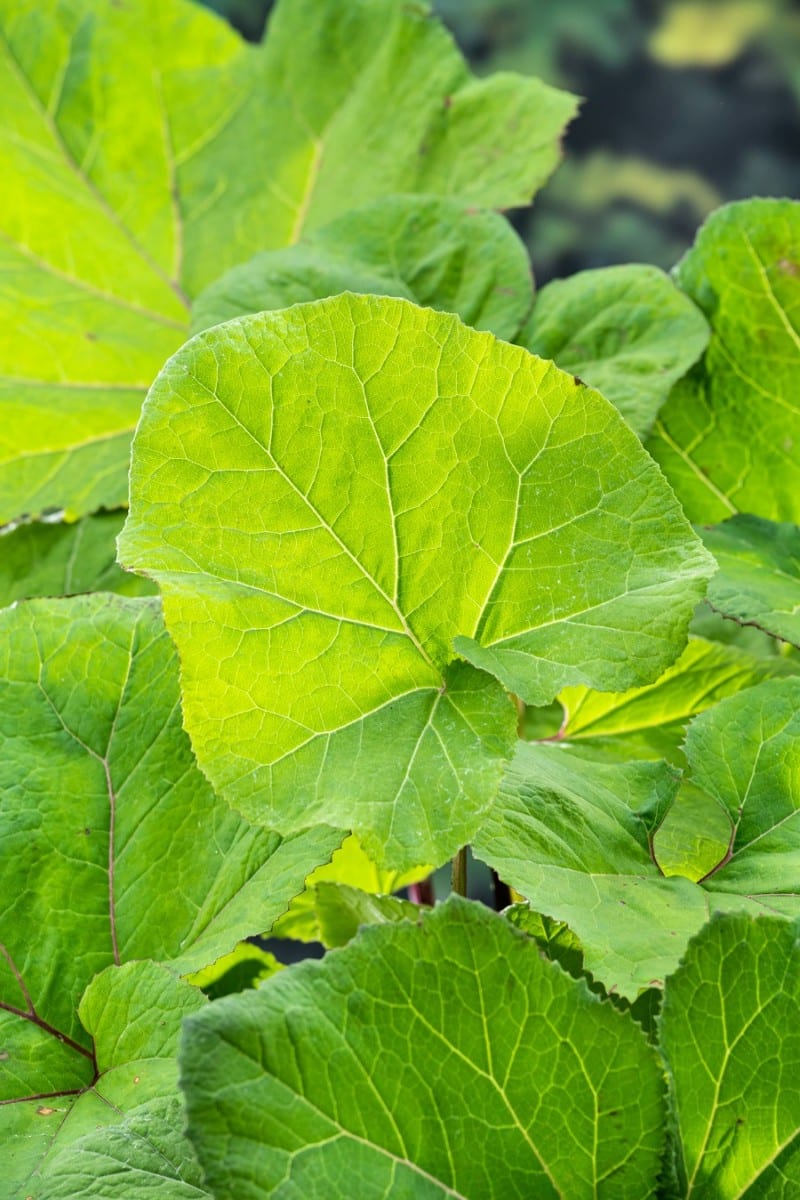


Common Butterbur (Medicinal plant) (Sold out)
Couldn't load pickup availability
Description
Description
Common butterbur, also known as butterbur or red butterbur, is a plant species in the daisy family. Greeks and Romans valued butterbur as early as the 1st century against malignant tumors, as did people in the Middle Ages, who used it against the plague. In folk medicine, various preparations of the plant are also used as expectorant cough remedies and as a cooling agent for insect bites. In the 19th century, the antispasmodic and analgesic effects were first recognized, and the plant or its preparations were rediscovered for medicinal use. The leaves of butterbur are somewhat reminiscent of rhubarb leaves in shape. They are rounded and usually have several leaf blades (lobes). Petasites hybridus blooms from March to May, with reddish-white flowers appearing before the basal leaves. Common butterbur is particularly suitable for planting at the edge of ponds. It naturally stabilizes the banks of water bodies.
Growth habit:
rhizome-forming, strong
Growth width:
20 to 50 cm
Growth height:
0.20 to 1.00 m
Growth rate:
normal